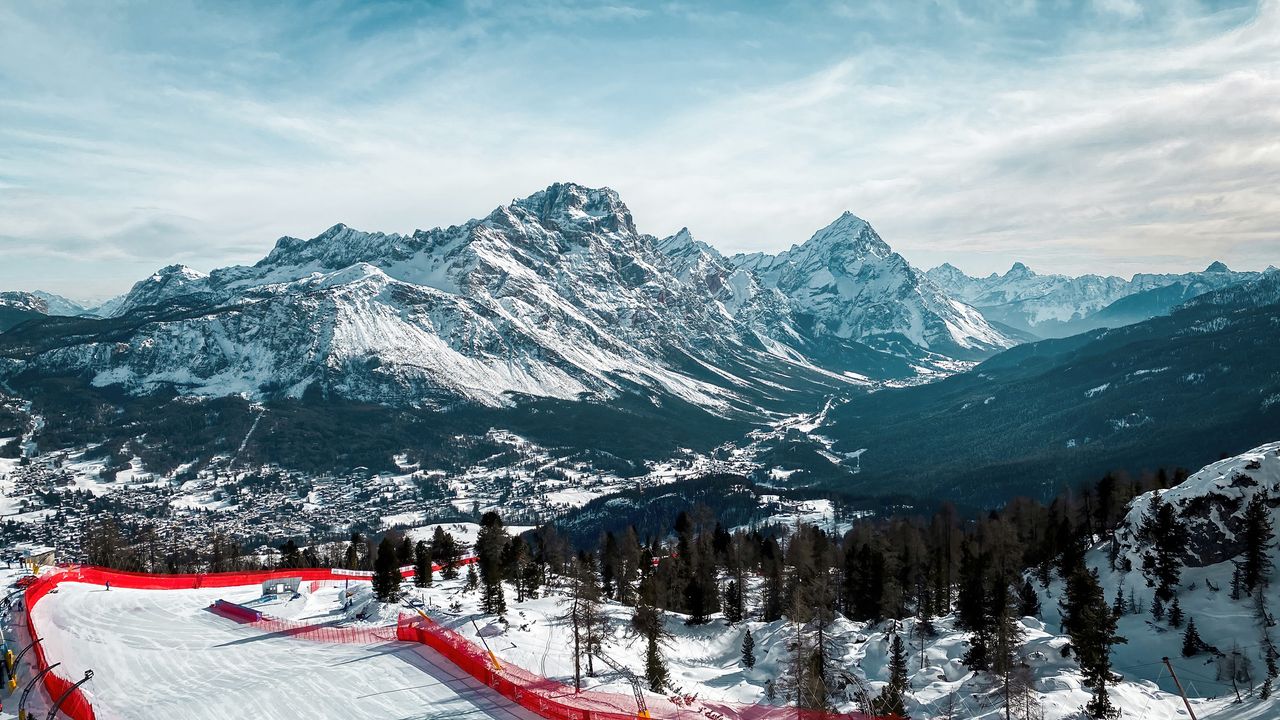
The Dolomite mountains have many charms: a pleasant Alpine climate in Northern Italy, a unique Italo-Germanic culture (much of the region belonged to the Austro-Hungarian Empire until after World War I), dramatic landscapes wherein soaring rock formations scrape the sky. In February the region’s snowy appeal will shine when it hosts the 2026 Winter Olympics. But travelers love it in summer too, when mountain lakes glimmer under the sun and a superb web of trails beckons. Compared with those of Switzerland and Austria, the vibe here is earthier and humbler, exemplified by the rifugio, a type of mountain lodge where warm meals (and sometimes beds) await after a hike or ski. But there are also sleek stays like the Italian Alps’ first Aman hotel, and classic addresses have been modernizing with new restaurants and spas. Covering more than 6,000 square miles, the Dolomites can’t be done in one trip—but you can see a good chunk of them if you know where to eat, stay, and play.
Get to Know the Dolomites
The Dolomite Alps stretch across three Italian regions: Trentino-Alto Adige, Veneto, and Friuli Venezia Giulia. For a more manageable trip, plan your visit around the land’s main geographic centers, each of which offers different things for different travelers.
Merano, Bolzano, and the West
- The Vibe: A summer hot spot with buzzing markets in Merano and Bolzano and landscapes featuring the area’s trademark limestone peaks.
- The Intel: Spa and wellness culture is big here; visit Terme Merano, where thermal baths are housed in a glass cube designed by star architect and Bolzano native Matteo Thun.
- The Stay: The Alpine minimalist hotel Adler Lodge Ritten has a moody forest sauna and an extensive spa menu.
Val Gardena and Central
- The Vibe: A skier’s haven with the huge Dolomiti Superski and iconic Sellaronda, a 27-mile ski circuit around the Sella group.
- The Intel: A high concentration of cable cars and punctual buses makes this region the best for those traveling without a car; high-speed trains connect Verona and Bressanone in just two hours.
- The Stay: The Alpenroyal Hotel has got it all, from Michelin-starred dining to a helipad.
Cortina D’Ampezzo and the East
- The Vibe: A natural paradise with the Tre Cime di Lavaredo and Alta Via hikes, the Sorapis and Braies lakes, and Cortina’s glitzy ski scene.
- The Intel: This side is a cradle of Ladin roots, which date back to when the Romans conquered Alpine tribes, particularly Val Badia, populated with traditional hamlets called viles (singular: vila).
- The Stay: The 22 rooms of Cortina d’Ampezzo’s Hotel de Len (“of wood” in Ladin) feature recycled local timber.
From Sleep to Slope
The best stays in the Dolomites grant roll-out-of-bed access to the top terrain in all seasons. The newest opened this past July: Aman Rosa Alpina was transformed from a 1930s mountain lodge (the old, beloved-by-all Rosa Alpina) into a polished temple of Alpine wood and stone. The hotel’s ski butlers help guests decipher the 745 miles of piste and 450 lifts in the 12 ski areas of Dolomiti Superski, including the famous Sellaronda, a 27-mile ski circuit circling the Sella group and many other trails dedicated to cross-country skiing and snow hiking. Perched atop the Plose massif, wellness haven Forestis is a ski-in, ski-out hotel that was once a tuberculosis sanatorium for Austrian royalty. It has 62 rooms and a massive spa that’s over 21,500 square feet; this summer it opened a new restaurant, Yera, constructed inside a mountain cave. In Sorafurcia, near Brunico, Alpin Panorama Hotel Hubertus finished a 2025 renovation of its Heaven & Hell sky spa, where, post-slopes, skiers can rest up in its striking cantilevered infinity pool suspended in the sky. In Cortina d’Ampezzo, Ancora Cortina reopened in June; its stylish makeover by Renzo Rosso, founder of the fashion label Diesel, fêtes the property’s nearly 200-year history. Coming up, the chic Hotel Cristallo will reopen as the Mandarin Oriental Cristallo after a hotly anticipated redo by the Swiss architecture firm Herzog and de Meuron.
High-Altitude Recovery
Compared with the medi-spas of Switzerland and France, wellness in the Dolomites is more free-spirited. Inspired by the ancient Celts who once occupied this region, the spa at Forestis offers wyda, a sort of Celtic yoga. Herbal treatments at Adler Lodge Ritten, near Bolzano, include medicinal hay baths, pioneered by farmers. Up the hill from Merano, Hotel Chalet Mirabell is the place for Aufguss, a sauna ritual where lights flash and music plays as Aufguss masters circulate heat by “conducting” the steam with a towel, moving almost as if they’re dancing.
Fuel Up at a Low-Key Rifugio
While traversing the area’s designated hiking trails, like the tough, high-altitude Alta Via or the scenic, beginner-friendly Tre Cime di Lavaredo, you’ll find rifugi, convivial taverns that offer the hearty cuisine typical of the Dolomites, such as sausage, spaetzle, and cheesy polenta. There are more than 1,000 rifugi in the region, all conveniently connected by hiking trails, making multiday treks easy and rewarding. In the east, on Mount Plose near Bressanone, Rossalm, a former shepherds hut and barn, serves plates of tagliatelle, air-dried Alpine speck from Alto Adige, and crispy pork knuckles. In the Sella Pass, which links Val Gardena and Val di Fassa, a snowcat whisks you up the piste to the gemütlich Fienile Monte, where you can wash down carpaccio-wrapped grissini and chateaubriand with fortifying glasses of Lambrusco. In the west’s less-visited Valle Isarco, join the snow hikers at rustic Almhütte Am Rinderplatz, a rifugio north of Bolzano, for simpler fare, including cups of homemade glühwein and tripe soup. From San Cassiano village, take the gondola up to Piz Sorega in Alta Badia, where Ütia Bioch pairs chanterelle and spinach knödel with local Pinot Nero, and warm apple strudel with a sweet Moscato. Toast any and all ambulatory odysseys with Forst, the refreshing local beer. If you can, catch a farmers or Christmas market in town: Bolzano’s greengrocers specialize in such endemic varieties as Terlano asparagus, high-altitude Val Venosta apricots, and Pala pears; the festive season comes especially alive in Merano, Bressanone, and Vipiteno.
And Try Some Elevated Eats
Fine dining in the Dolomites takes Alpine cuisine to new heights. One of the best? Oste Scuro-Finsterwirt in Bressanone, which serves cherry gazpacho with nettle cream and saddle of venison with celery cream and potato praline. Plus, the owners run the nearby and recently renovated Adler Historic Guesthouse, so you can fall right into bed after dinner—or soak in its rooftop pool right before.}
Reinhold’s Recs
In 1980 the first person to ascend Mount Everest solo was the Dolomites mountaineer Reinhold Messner. Now 81 years old, he still scales peaks closer to home. Here are his picks for where to eat, hike, and hang in his Dolomites domain.
Adolf Munkel Trail: “For me, this is the most beautiful hike in the Dolomites. This loop is almost six miles long and isn’t that steep. While hiking, you can see the Geislerspitzen (Gruppo delle Odle), these 250-million-year-old rock formations that poke out from the mountains.”
Gschnagenhardt Hut: “This is my favorite rifugio. It’s on the Adolf Munkel Trail and sits below the Geisler (Odle) peaks in Val di Funes. I always have a plate of fried eggs, bacon, and roasted potatoes. For me, that’s the ultimate mountaineer’s meal. It fills you with energy after a long ascent.”
Reinhold Messner Haus: “We turned a former cable car station into this center that covers sustainability and the environment. It opened in September, on my birthday. We hosted a concert and a discussion with politicians and scientists about the local wolf population.”
Learning Ladin: German and Italian are the two most popular official languages, but you may hear a third: Ladin. Today this ancient local tongue is spoken in areas around the Sella massif, Belluno province, and northwestern Trentino. People in the Dolomites don’t expect you to know it, but saying bun dé instead of hello and de gra instead of danke or grazie is a sign of respect that goes a long way.
Hitting the Road
The Bolzano Airport connects the western Dolomites to European capitals like London and Berlin via the regional airline SkyAlps, but it’s best to get a car. Rent one in Brescia or Innsbruck for easy access into the ski resorts of Val Gardena; start from Venice to reach Cortina in two hours. For public transportation, trains from Venice, Verona, Munich, and Innsbruck can get you into the centers of Bressanone, Bolzano, Brunico, and Merano. The region’s gondolas, chairlifts, and funiculars bring you atop the mountains for summer hikes or winter snow shredding. New ones include the Sonnen gondola, reaching altitudes of over 6,500 feet in just six minutes, in the Klausberg ski area; a 10-seater at the Ladurns ski resort, close to the Italy-Austria border; and a cable car (pictured) that links Castelrotto with the Marinzen Alp hiking area.
This article appeared in the December 2025 issue of Condé Nast Traveler. Subscribe to the magazine here.
Originally published at Conde Nast Traveler