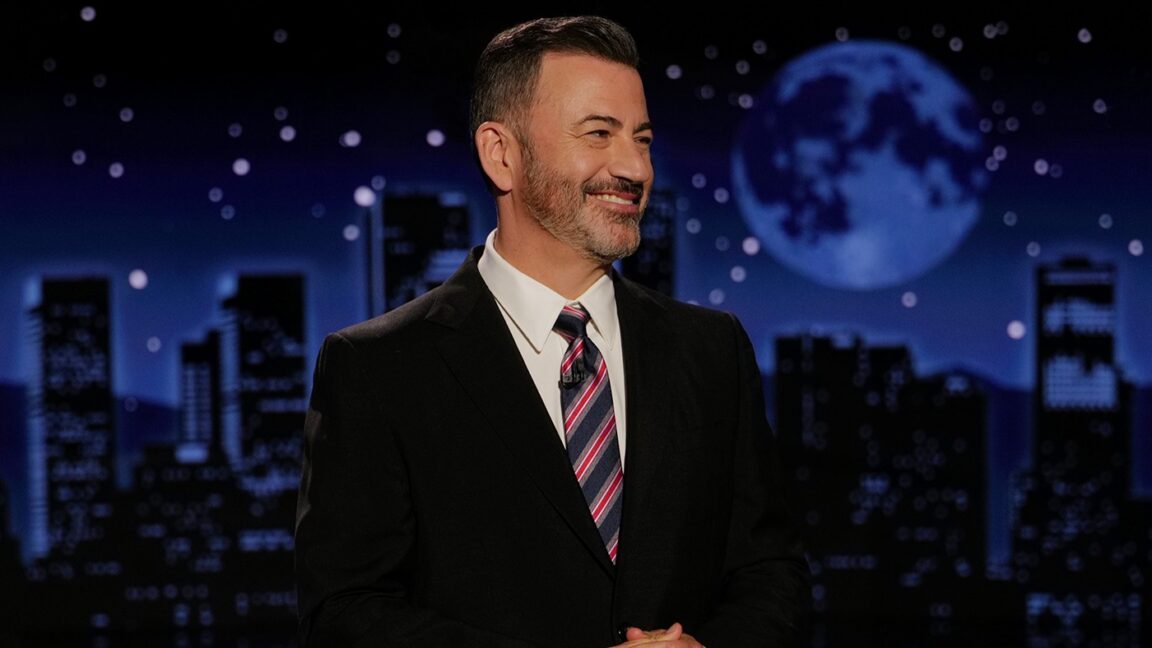
The Federal Communications Commission today issued a warning to late-night and daytime talk shows, saying these shows may no longer qualify for an exemption to the FCC’s equal-time rule. Because the FCC is chaired by vocal Trump supporter Brendan Carr, changing how the rule is enforced could pressure shows into seeking out more interviews with Republican candidates.
The public notice providing what the FCC calls “guidance on political equal opportunities requirement for broadcast television stations” appears to be part of the Trump administration’s campaign against alleged liberal bias on broadcast TV. Carr, who has eroded the FCC’s historical independence from the White House, previously pressured ABC to suspend Jimmy Kimmel and threatened ABC’s The View with the equal-time rule.
The Carr FCC’s public notice today said that federal rules “prevent broadcast television stations, which have been given access to a valuable public resource (namely, spectrum), from unfairly putting their thumbs on the scale for one political candidate or set of candidates over another.” These rules come from “the decision by Congress that broadcast television stations have an obligation to operate in the public interest—not in any narrow partisan, political interest,” the Carr FCC said.
While the public notice doesn’t make allegations against any specific station or program, a conservative group that has filed FCC complaints against broadcast stations treated the move as a victory against “left-wing” shows.
“This major announcement from the FCC should stop one-sided left-wing entertainment shows masquerading as ‘bona fide news,’” wrote Daniel Suhr, president of the Center for American Rights. “The abuse of the airwaves by ABC & NBC as DNC-TV must end. FCC is restoring respect for the equal time rules enacted by Congress.” Suhr’s group filed bias complaints against CBS, ABC, and NBC stations that were dismissed during the Biden era, but the group’s complaints were revived by Carr in January 2025.
FCC Democrat says the rules haven’t changed
The equal-time rule, formally known as the Equal Opportunities Rule, applies to radio or TV broadcast stations with FCC licenses to use the public airwaves. When a station gives time to one political candidate, it must provide comparable time and placement to an opposing candidate if an opposing candidate makes a request.
The rule has an exemption for candidate appearances on bona fide news programs. As the FCC explained in 2022, “appearances by legally qualified candidates on bona fide newscasts, interview programs, certain types of news documentaries, and during on-the-spot coverage of bona fide news events are exempt from Equal Opportunities.”
Entertainment talk shows have generally been treated as bona fide news programs for this purpose. But Carr said in September that he’s not sure shows like The View should qualify for the exemption, and today’s public notice suggests the FCC may no longer treat these shows as exempt.
Commissioner Anna Gomez, the only Democrat on the FCC, issued a press release criticizing the FCC for “a misleading announcement suggesting that certain late-night and daytime programs may no longer qualify for the long-standing ‘bona fide news interview’ exemption under the commission’s political broadcasting rules.”
“Nothing has fundamentally changed with respect to our political broadcasting rules,” Gomez said. “The FCC has not adopted any new regulation, interpretation, or commission-level policy altering the long-standing news exemption or equal time framework. For decades, the commission has recognized that bona fide news interviews, late-night programs, and daytime news shows are entitled to editorial discretion based on newsworthiness, not political favoritism. That principle has not been repealed, revised, or voted on by the commission. This announcement therefore does not change the law, but it does represent an escalation in this FCC’s ongoing campaign to censor and control speech.”
FCC casts doubt on Jay Leno ruling
The Carr FCC’s public notice said that talk shows aren’t necessarily eligible for the bona fide news exception despite a 2006 decision in which “the FCC’s Media Bureau determined that the interview portion of ‘The Tonight Show with Jay Leno’ qualified for the equal opportunities exemption as a bona fide news interview.”
The notice said, “Concerns have been raised that the industry has taken the Media Bureau’s 2006 staff-level decision to mean that the interview portion of all arguably similar entertainment programs—whether late night or daytime—are exempted from the section 315 equal opportunities requirement under a bona fide news exemption. This is not the case. As noted above, these decisions are fact-specific and the exemptions are limited to the program that was the subject of the request.”
The public notice pointedly said that “the FCC has not been presented with any evidence that the interview portion of any late-night or daytime television talk show program on air presently would qualify for the bona fide news exemption.” The notice encouraged programs or stations to promptly file petitions with the FCC if they want “formal assurance that the equal opportunities requirement does not apply” to them.
Gomez urged broadcasters to exercise their free speech rights.
“Broadcasters should not feel pressured to water down, sanitize, or avoid critical coverage out of fear of regulatory retaliation,” she said. “Broadcast stations have a constitutional right to carry newsworthy content, even when that content is critical of those in power. That does not change today, it will not change tomorrow, and it will not change simply because of this administration’s desire to silence its critics.”

Originally published at Ars Technica